
Common Home Heating Problems and How to Fix Them
A guide to common home heating problems, their warning signs, and why professional repair is crucial for safety, efficiency, and long-term home value.

By Alex Carter
Learn more about Heating System Repair or Maintenance for guides, costs, and what to expect.
Compare Heating System Repair or Maintenance Pros Near You

Enter your ZIP code to compare top-rated local professionals and request free quotes.
You wake up on a chilly morning, expecting your home to be cozy, but instead, you’re greeted by a draft or an odd noise from the furnace. Maybe your energy bills have been creeping up for no clear reason, or some rooms just never seem to get warm. These are the first hints of home heating problems, issues that many homeowners discover only when comfort fades or costs rise. Ignoring these signs can lead to more than just a cold house; it can result in expensive repairs, unsafe conditions, and significant damage to your property.
Understanding Home Heating Problems
Home heating problems refer to any issue that prevents your heating system from working efficiently, safely, or effectively. This can include everything from a faulty furnace and clogged filters to poor insulation and leaky ductwork. The goal of your heating system is to provide consistent, affordable warmth, and any obstacle to that is a problem worth solving.
These issues happen for many reasons. Systems age and wear out, components fail, and homes settle or change over time. Even a well-maintained system can develop problems after years of reliable service. Furthermore, changes in your home, like adding new windows or finishing a basement, can alter how heat circulates, creating new challenges.
While any home can experience heating troubles, older homes with aging equipment are often most affected. However, even newer systems can have issues if they were improperly sized during installation or if routine maintenance has been overlooked.
Why This Matters for Your Home
An inefficient heating system does more than leave you reaching for an extra sweater. It directly impacts your wallet, your safety, and the long-term health of your home. A struggling furnace or boiler has to work much harder, consuming far more energy to produce the same amount of heat. This inefficiency shows up as those surprisingly high utility bills that leave you puzzled each winter.
Beyond cost, safety is a paramount concern. Faulty heating systems, particularly those that burn fuel like natural gas or oil, can pose serious risks. These include carbon monoxide leaks, which are odorless and deadly, or potential fire hazards from electrical issues or overheated components. Protecting your family means taking these risks seriously.
Finally, unresolved heating problems can lead to property damage. Inconsistent heat can cause pipes to freeze and burst. Poor circulation can create moisture issues, leading to mold growth. Addressing problems early preserves your comfort, your budget, and your peace of mind.
If you notice signs of this issue in your home, it may help to speak with a qualified contractor. Request a free quote or call to explore your repair or remodeling options.
Common Problems Homeowners Experience
Heating issues rarely announce themselves with a single, obvious symptom. Instead, they manifest through a combination of subtle clues that disrupt your home’s comfort. You might find yourself constantly adjusting the thermostat, closing vents in rooms that are too hot, or dealing with strange smells when the system kicks on.
These problems often stem from a few key areas within your overall home comfort system. Understanding the common culprits can help you describe the issue more accurately to a professional. For a deeper look at how these systems are supposed to function, our guide on how HVAC systems work breaks down the basics.
- Uneven Heating: Some rooms are too hot while others are freezing, often due to ductwork issues, poor insulation, or an improperly sized system.
- Frequent Cycling: The furnace turns on and off too frequently, which strains the system and wastes energy.
- No Heat or Insufficient Heat: The system runs but produces little to no warm air, indicating a potential component failure or fuel issue.
- Strange Noises: Loud banging, screeching, rattling, or popping sounds from the furnace or ductwork.
- Rising Energy Bills: A steady, unexplained increase in heating costs despite normal usage.
- Poor Air Quality: Excessive dust, dry air, or strange odors (like burning dust or a metallic smell) circulating through your vents.
How Professionals Solve the Problem
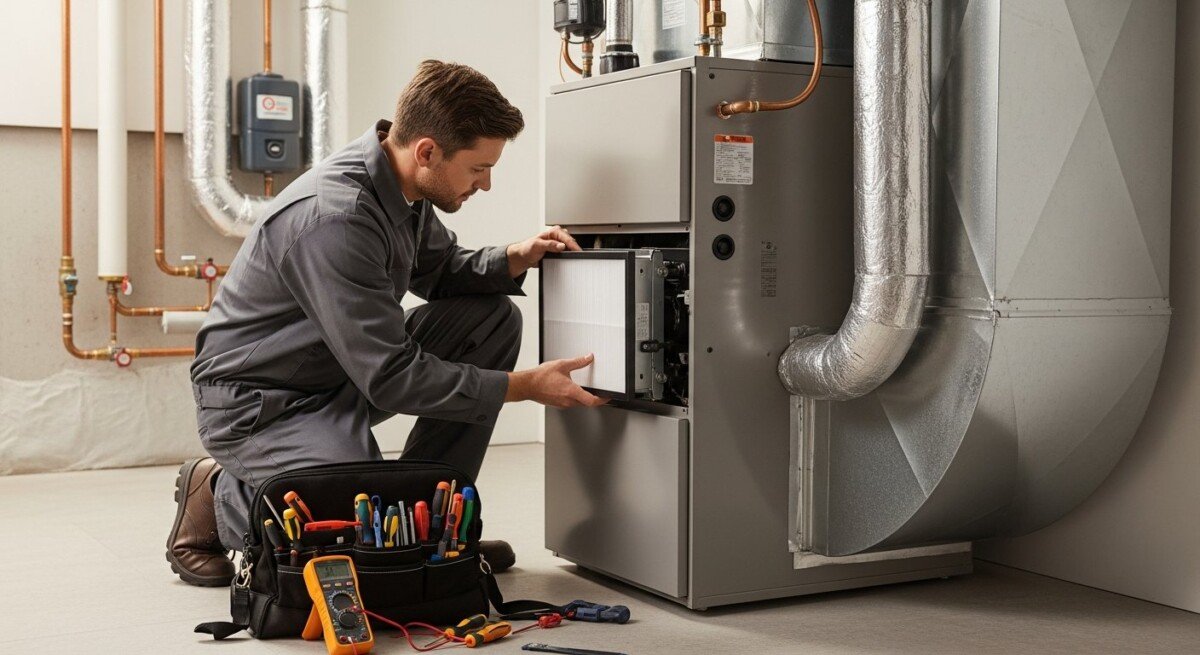
When you call a professional for a heating issue, their first job is not to sell you a new system, but to accurately diagnose the root cause. A qualified contractor will perform a comprehensive inspection of your entire heating system, from the thermostat to the heat exchanger and everything in between. This systematic approach ensures they fix the real problem, not just a symptom.
The repair or replacement process is methodical and focused on long-term solutions. Professionals have the tools, training, and experience to handle complex components safely, especially when dealing with gas lines, electrical connections, or refrigerants. Their work often follows a clear, step-by-step process to ensure reliability and safety.
- Comprehensive Inspection & Diagnosis: The technician will test system components, check for safety issues like gas leaks or carbon monoxide, and assess airflow and thermostat calibration.
- Clear Explanation & Options: A trustworthy pro will explain what they found, why it happened, and present your repair or replacement options with transparent pros and cons.
- Precise Repair or Installation: Using proper tools and manufacturer specifications, they will execute the solution, whether it’s replacing a faulty ignitor, sealing leaky ducts, or installing a new, correctly sized furnace.
- System Testing & Client Walkthrough: After the work is complete, they will test the entire system for performance and safety, then show you how it operates and explain any new features or maintenance needs.
A professional inspection can reveal hidden issues before they become expensive repairs. Compare contractor quotes here or call to discuss your project.
Warning Signs You Should Not Ignore
Your heating system often gives you plenty of warning before it fails completely. Learning to recognize these early signs can mean the difference between a simple, affordable repair and a full, emergency replacement in the dead of winter. Paying attention to these signals protects your investment and your comfort.
Acting quickly when you notice a warning sign can prevent a minor issue from cascading into a major breakdown. For instance, a small water leak near a boiler can indicate a failing component; ignoring it could lead to water damage or corrosion that ruins the entire unit. Similarly, being proactive about maintenance is as crucial for your heating system as it is for other home appliances. Just as you would watch for water heater replacement signs, your furnace and boiler need the same vigilance.
- The Yellow or Flickering Flame: A healthy furnace flame should be steady and blue. A yellow, flickering, or irregular flame can signal a dangerous carbon monoxide risk.
- Persistent Strange Odors: A brief dusty smell at season’s start is normal. A persistent smell of burning, rotten eggs, or chemicals is not and requires immediate attention.
- Visible Soot or Rust: Noticeable soot around the furnace or rust on the vent pipe or the unit itself indicates improper combustion or moisture issues.
- Age of the System: If your furnace or boiler is over 15 years old and requiring frequent repairs, its efficiency and reliability are declining.
- Excessive Humidity or Condensation: Unusual moisture on windows, walls, or around the heating unit itself can point to ventilation or combustion problems.
- Pilot Light Frequently Going Out: This is a classic sign of a faulty thermocouple or another underlying issue that needs repair.
What Affects the Cost of Repairs or Installation
The cost to fix a heating problem can vary widely, and understanding the factors involved helps you budget realistically. There’s no one-size-fits-all price because every home and every system is unique. A professional estimate will consider the specific details of your situation to provide an accurate cost.
Key factors include the type and extent of the repair needed. Replacing a simple thermostat is far less involved than replacing a cracked heat exchanger. The age and model of your existing system also matter, as parts for older or discontinued models can be harder to find and more expensive. If a full replacement is necessary, the size (or capacity) of the new unit required to heat your home efficiently is a primary cost driver.
Other considerations are the accessibility of your equipment (a furnace in a tight crawl space takes longer to service), local labor rates, and any necessary permits. The complexity of integrating the new system with your existing ductwork or home layout also plays a role. A detailed, in-home estimate is the only way to get a true picture of the investment required.
Costs can vary depending on the condition of your home. The best way to know the price is to get a personalized estimate. Request free quotes from contractors or call today.
How to Choose the Right Contractor
Selecting the right professional is just as important as deciding to make the repair. A skilled, trustworthy contractor will ensure the job is done safely, correctly, and efficiently, providing value that lasts for years. Start by looking for established local companies with strong reputations for quality heating work.
Don’t be afraid to ask detailed questions. A reputable contractor will be happy to provide proof of their qualifications and explain their process clearly. They should view your questions as a sign of an informed homeowner, not an inconvenience. This careful selection process is a critical step for any major home project, much like the due diligence recommended when hiring a bathroom remodeler.
- Verify Licenses, Insurance, and Certifications: Ensure they are legally permitted to work in your area, carry liability insurance, and have technicians certified by organizations like NATE (North American Technician Excellence).
- Read Reviews and Ask for References: Check online reviews on multiple platforms and ask the company for references from recent customers with similar projects.
- Get Detailed, Written Estimates: A quote should be in writing and itemize costs for parts, labor, and any potential additional charges. Avoid vague verbal estimates.
- Compare Multiple Quotes: Get at least three detailed estimates to understand the market rate and the different approaches contractors might take.
- Ask About Experience with Your System Type: Confirm they have specific experience with your brand or type of heating system (e.g., heat pump, high-efficiency gas furnace, boiler).
Long-Term Benefits of Professional Work
Investing in professional heating repair or installation pays dividends long after the initial work is complete. The most immediate benefit is often restored comfort,consistent, reliable warmth throughout your home without constant thermostat adjustments or worries about system failure on the coldest night of the year.
Professional work also enhances safety and efficiency. A correctly repaired or properly installed system operates as designed, minimizing risks like carbon monoxide leaks. It also runs more efficiently, which directly translates to lower monthly energy bills. This efficiency isn’t just good for your budget; it’s better for the environment, reducing your home’s overall energy consumption.
Finally, a well-functioning heating system protects your property value. It’s a major home system that potential buyers will scrutinize. Documentation of professional installation and regular maintenance is a strong selling point. It also reduces the likelihood of emergency breakdowns and costly future repairs, giving you predictable performance and peace of mind for seasons to come.
What are the most common signs my heating system is failing?
Look for rising energy bills with no change in use, uneven temperatures between rooms, strange noises like banging or screeching, and frequent cycling where the system turns on and off rapidly. Any yellow flame in a gas furnace is an urgent warning sign of potential carbon monoxide.
How often should I have my heating system serviced?
Most manufacturers and HVAC professionals recommend an annual professional tune-up, ideally in the fall before the heating season begins. This preventative maintenance catches small issues early, ensures safe operation, and helps your system run at peak efficiency.
Can I fix my home heating problem myself?
Some basic maintenance, like changing air filters, is safe for homeowners. However, most repairs involve electrical components, fuel lines, or pressurized systems that require special tools and training. DIY attempts on complex systems can void warranties, create safety hazards, and often lead to more expensive repairs later.
How long should a furnace or boiler last?
The average lifespan of a well-maintained furnace is 15-20 years, while a boiler can last 20-30 years. Efficiency and reliability decline significantly as systems approach and exceed these ages, making replacement more cost-effective than repeated repairs.
What does “sizing” a new heating system mean?
Sizing refers to calculating the correct heating capacity (measured in BTUs) needed for your specific home. A professional performs a “Manual J” calculation, considering your home’s square footage, insulation, windows, and climate. An oversized system will short-cycle and waste energy; an undersized one will run constantly and never keep up.
Will a new heating system really save me money?
Yes, significantly. Modern high-efficiency heating systems can be 15-30% more efficient than units from 15-20 years ago. This translates directly into lower monthly utility bills, often offsetting a portion of the investment over time through energy savings.
What is the difference between a repair and a replacement?
A repair fixes a specific component of your existing system. A replacement involves installing entirely new equipment. The right choice depends on the age of your system, the cost of the repair, and the potential efficiency gains of a new unit. A good rule of thumb is if the repair cost is over half the price of a new system, replacement is usually the better long-term value.
Home heating problems start as minor inconveniences but can quickly escalate into major concerns affecting your comfort, safety, and finances. By understanding the warning signs and the value of professional solutions, you can make informed decisions to protect your home. Addressing issues early is always more cost-effective than waiting for a full breakdown. If you’re experiencing any signs of heating trouble, a smart first step is to consult with qualified local contractors to understand your specific options and costs.
Learn more about Heating System Repair or Maintenance for guides, costs, and what to expect.
Compare Heating System Repair or Maintenance Pros Near You
Enter your ZIP code to compare top-rated local professionals and request free quotes.