Common Ductwork Problems and Professional Solutions
"*" indicates required fields
Your home’s ductwork is the hidden highway that delivers comfort to every room. When it’s working perfectly, you hardly give it a thought. But when problems arise, they can lead to higher energy bills, uneven temperatures, and poor indoor air quality. Understanding these hidden issues is the first step to restoring your home’s comfort and efficiency.
Understanding Your Home’s Ductwork System
Your duct system is a network of tubes, typically made of sheet metal, fiberglass, or flexible plastic, that runs through your walls, floors, and ceilings. It’s connected to your furnace and air conditioner, responsible for distributing heated or cooled air throughout your home and returning it back to the HVAC unit to be reconditioned.
Because ducts are hidden from view, problems can develop slowly and go unnoticed for a long time. A well-designed and properly sealed system is crucial for maintaining consistent comfort, healthy air, and manageable utility costs. Just as you would investigate common plumbing problems with visible leaks, hidden ductwork issues deserve the same attention.
Why Ductwork Problems Matter for Homeowners
Faulty ductwork doesn’t just mean one room is a little too warm. It has a direct and significant impact on your daily life and your wallet. Leaky or poorly insulated ducts can waste 20-30% of the air moving through the system, according to the U.S. Department of Energy. This means nearly a third of your heating and cooling dollars could be escaping into your attic or crawlspace.
Beyond cost, compromised ducts can pull in dust, insulation fibers, and even pest debris from attics and wall cavities, circulating them into your living spaces. This can aggravate allergies and reduce overall air quality. Ensuring your ducts are in good shape is a key part of home maintenance that protects your investment and your family’s comfort.
Is your home feeling uncomfortable or costing too much to heat and cool? Our team can provide a thorough duct inspection to pinpoint the source of the problem. Call us at (123) 456-7890 or visit our contact page to schedule an assessment.
Common Ductwork Issues and Their Causes
Most ductwork problems fall into a few key categories. The first and most common is leaks and disconnections. Over time, vibrations from the HVAC system, house settling, or accidental damage during other projects can cause seams to split or sections to pull apart. This is especially common in flexible ductwork if it’s not properly supported.
Another widespread issue is poor design or installation. Ducts that are too small, have too many sharp turns, or are laid out inefficiently restrict airflow from the start. This forces your system to work harder, leading to premature wear and tear. Additionally, a lack of proper insulation, particularly in unconditioned spaces like attics, allows valuable heated or cooled air to be lost before it reaches your rooms.
- Leaks and Disconnections: At joints, seams, or where ducts connect to vents.
- Poor Insulation: Especially in attics, garages, or crawlspaces.
- Crushed or Kinked Flexible Ducts: Often from improper installation or storage in the attic.
- Internal Blockages: From dust buildup, collapsed insulation, or even pest nests.
- Corrosion or Rust: In metal ducts, often due to moisture problems.
How Professionals Diagnose and Fix Duct Problems
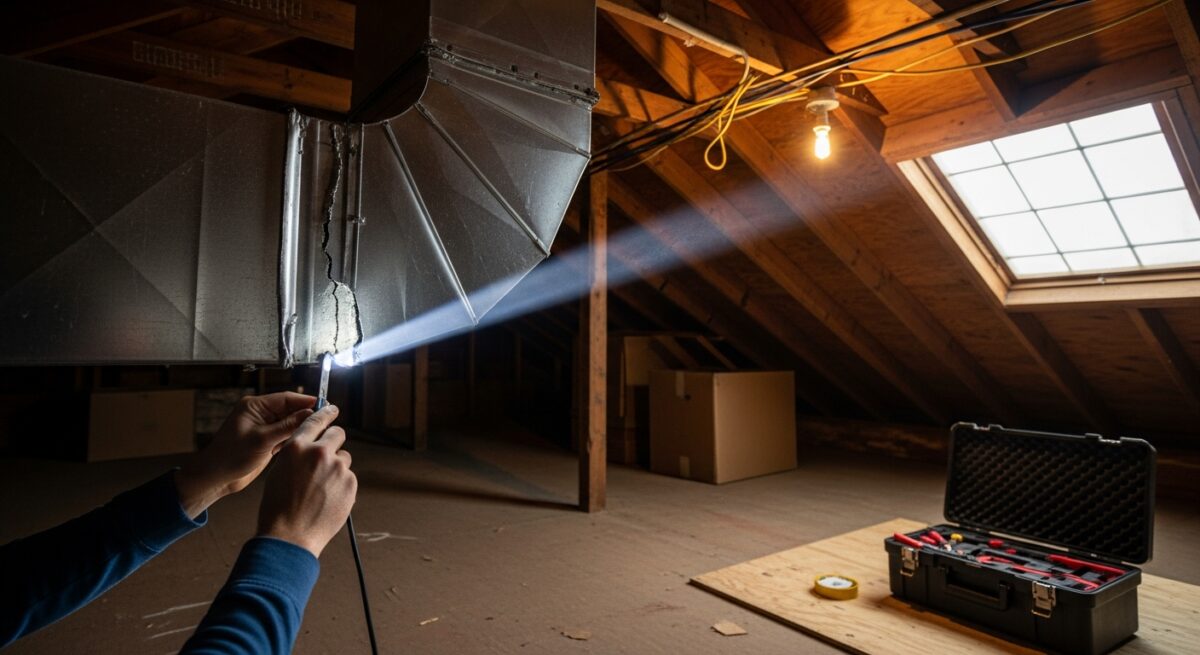
A professional HVAC technician starts with a comprehensive inspection. This often involves a visual check of accessible ducts in basements, attics, and crawlspaces, and may include using specialized tools like a duct camera to see inside enclosed runs. One of the most effective diagnostic methods is a duct blaster test, which pressurizes the system to measure exactly how much air is leaking.
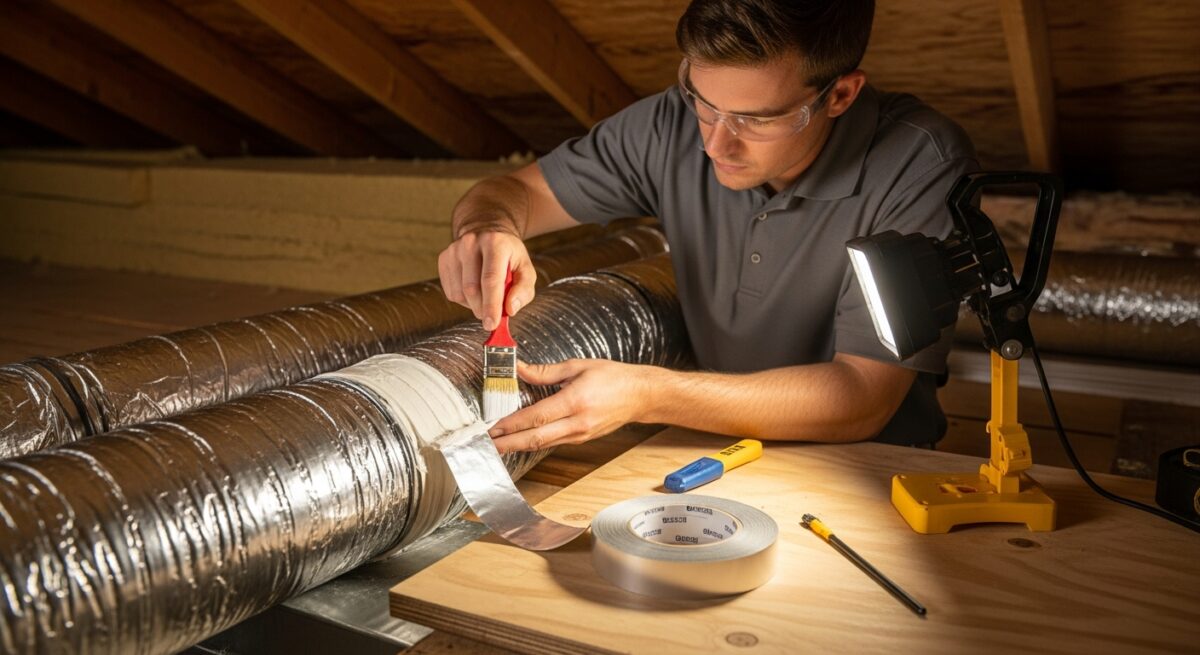
Once the problems are identified, the repair process begins. For leaks, technicians use professional-grade mastic sealant or metal-backed tape (not standard duct tape, which degrades) to seal all seams and connections. Disconnected sections are reattached and secured. For crushed or damaged flexible ducts, the damaged section is replaced. In cases of severe design flaws, a technician might recommend redesigning and replacing key sections of the duct system to improve airflow. For ongoing maintenance, services like professional ductwork cleaning can remove internal blockages and improve air quality.
Don’t let hidden duct issues drain your comfort and your budget. Our expert technicians use industry-best practices to seal, repair, and optimize your system. Contact us today at (123) 456-7890 for a lasting solution.
Warning Signs You Should Not Ignore
Your home often gives you clear signals when the ductwork is failing. The most obvious sign is rooms that are consistently too hot or too cold, no matter what you set the thermostat to. You might also notice that certain vents have very weak airflow compared to others, or that your system is constantly running as it struggles to reach the desired temperature.
Listen for unusual sounds like whistling or rattling coming from the ducts when the system is on, which can indicate gaps or loose sections. A sudden and unexplained spike in your heating or cooling bills is a major red flag, as is excessive dust blowing out of your vents or settling on furniture shortly after the system kicks on.
- Uneven temperatures from room to room.
- Significantly higher than normal energy bills.
- Dusty rooms shortly after the HVAC system runs.
- Whistling or rattling noises from ducts in walls or floors.
- Weak or no airflow from specific supply vents.
Factors That Affect Repair and Replacement Costs
The cost to fix ductwork depends on the severity of the problem and the accessibility of your system. A straightforward service call to seal a few accessible leaks in an attic will cost significantly less than a full redesign and replacement of a badly installed system hidden behind finished walls and ceilings.
The main cost factors include the extent of the damage, the type of duct material (sheet metal vs. flexible), how much of the system is in easy-to-reach unconditioned spaces versus enclosed areas, and local labor rates. A full ductwork repair project is an investment, but one that typically pays for itself in energy savings within a few years, while also extending the life of your expensive HVAC equipment.
Concerned about cost? We provide transparent, upfront estimates so you know exactly what to expect. Let us assess your system and give you an honest recommendation. Call (123) 456-7890 now for a free, no-obligation quote.
How to Choose the Right Ductwork Professional
Selecting a qualified contractor is crucial for a lasting repair. Look for a licensed, bonded, and insured HVAC company with specific experience in ductwork testing, sealing, and design—not all HVAC techs specialize in this area. A reputable professional will perform diagnostic testing before giving an estimate and should be able to explain the problems and proposed solutions clearly.
Ask for references and check online reviews. Be wary of anyone who recommends a full replacement without showing you clear evidence of why repairs won’t suffice, or who offers “whole-house duct cleaning” as a cure-all for airflow problems without first checking for leaks. A good technician will prioritize sealing leaks, as this is the most effective first step for efficiency.
The Long-Term Benefits of Healthy Ductwork
Investing in duct repair delivers benefits you’ll feel and see for years. The most immediate is enhanced comfort, with even temperatures from room to room. Your HVAC system will no longer have to strain, which reduces noise, prevents breakdowns, and extends its overall lifespan.
Your monthly energy bills will drop as your system operates at peak efficiency. Improved air sealing also means less dust, pollen, and airborne irritants are pulled into your ducts from attics and walls, leading to a cleaner, healthier home environment. It’s a home improvement that increases efficiency, comfort, and value all at once.
Frequently Asked Questions About Ductwork
How often should I have my ducts inspected?
It’s wise to have a visual inspection during your annual HVAC system tune-up. A full diagnostic test (like a duct blaster test) is recommended if you notice any warning signs, are moving into an older home, or haven’t had one done in over five years.
Can I seal my ductwork myself with duct tape?
No. Common cloth-backed duct tape dries out, cracks, and fails quickly on ducts due to temperature changes. Professionals use UL-181 approved foil tape or mastic sealant, which are designed to last for the long term on duct systems.
Will sealing my ducts improve my air conditioning performance?
Absolutely. Sealing leaks prevents cool, dehumidified air from escaping into hot attics. This means more cool air reaches your rooms, allowing your AC to cool your home more quickly and efficiently, often while running less.
What’s the difference between duct sealing and duct cleaning?
Duct sealing fixes leaks in the ducts themselves to improve efficiency. Duct cleaning removes dust, debris, and allergens from inside the ducts to improve air quality. Sealing should often be done first, as it prevents new debris from being pulled in.
How long does professional duct sealing last?
When performed correctly with the right materials, professional duct sealing can last 10 years or more. It is a durable repair that isn’t typically affected by normal system operation.
Are there any rebates or incentives for duct sealing?
Sometimes. Many utility companies offer rebates because improved efficiency benefits the overall grid. It’s always worth checking with your local energy provider or discussing potential incentives with your HVAC contractor.
Your home’s ductwork is a vital component of your comfort system, and addressing problems proactively saves money, improves health, and enhances daily living. By recognizing the signs and trusting a qualified professional for diagnosis and repair, you can ensure your hidden airways are working perfectly for you, delivering comfort efficiently to every corner of your home for years to come.


About Alex Carter
"*" indicates required fields
Recent Posts
Related Posts