Central Air Repair: A Homeowner’s Guide to Cool Comfort
"*" indicates required fields
Your central air conditioner is a quiet hero, working tirelessly to keep your home comfortable during the hottest months. But when it breaks down, the sudden loss of cool air can be more than an inconvenience,it can disrupt your daily life and put your family’s comfort at risk. Understanding central air repair is the first step to restoring your peace of mind and protecting your investment in home comfort.
What Central Air Repair Means for Homeowners
Central air repair involves diagnosing and fixing problems within your home’s complete cooling system. This system is more than just the outdoor unit you see; it includes the indoor air handler, refrigerant lines, ductwork, thermostat, and electrical components. A professional repair addresses the root cause of a malfunction to restore efficient, reliable cooling.
Think of it as a targeted medical treatment for your home’s cooling system. Instead of just addressing a symptom, a skilled technician identifies the underlying issue. This approach ensures the repair is effective and helps prevent the same problem from recurring shortly after, saving you money and frustration in the long run.
The Difference Between Repair and Replacement
A crucial part of understanding repair is knowing when it’s the right choice versus when a system replacement is more cost-effective. A reputable professional will always provide an honest assessment. If your system is relatively young, a repair is often the sensible path. For older units with frequent breakdowns or severely failing components, replacement may offer better long-term value and efficiency.
Why It Matters for Homeowners
Prompt and professional central air repair is essential for more than just comfort. A malfunctioning system must work harder to cool your home, leading to skyrocketing energy bills. You might see your monthly costs jump significantly for the same,or worse,level of cooling performance.
Beyond your wallet, your health and home are at stake. A poorly functioning AC unit can struggle to remove humidity, creating a damp environment ideal for mold and mildew growth. Furthermore, certain issues, like electrical problems or refrigerant leaks, can pose safety hazards. Timely repair protects your family’s well-being and your property. Just as with a failing heating system, ignoring warning signs can lead to more extensive and expensive damage.
Let our certified technicians restore your cool comfort quickly and reliably. Call us now at (555) 123-4567 or schedule your repair service online.
Common Issues and Their Causes
Central air conditioners are complex machines, and several common problems can interrupt their operation. Understanding these can help you communicate more effectively with your technician.
Many issues stem from a lack of routine maintenance. Dirty air filters, clogged condenser coils, and low refrigerant levels are frequent culprits behind poor performance. These are often preventable with regular care. Other problems involve wear and tear on mechanical parts, like the compressor or fan motors, which naturally degrade over years of use.
- Insufficient Cooling: Often caused by dirty filters/coils, low refrigerant, or a failing compressor.
- Frequent Cycling: The unit turns on and off too often. This can be due to an oversized unit, a faulty thermostat, or restricted airflow.
- Unusual Noises: Grinding, squealing, or banging sounds typically indicate mechanical issues like a failing motor, loose parts, or a damaged blower wheel.
- Water Leaks: A clogged condensate drain line is the most common cause, leading to water pooling around the indoor unit. This requires prompt attention to prevent water damage, similar to the risks posed by hidden water leaks in your plumbing.
- No Power/No Response: Usually points to an electrical issue, such as a tripped circuit breaker, a blown fuse, or faulty wiring.
How Professionals Fix the Problem
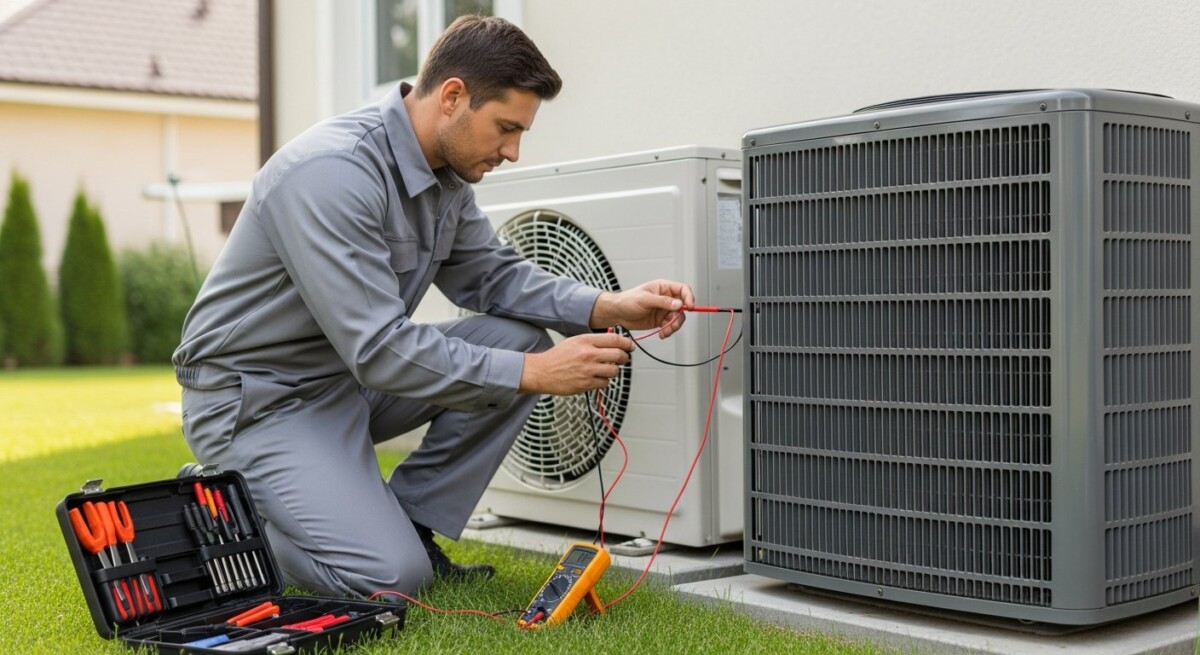
A professional repair follows a systematic process to ensure accuracy and safety. It begins with a thorough inspection and diagnosis. The technician will check your thermostat settings, inspect the air filter and indoor/outdoor units, listen for unusual sounds, and use specialized tools to measure refrigerant pressure, electrical voltage, and airflow.
Once the problem is pinpointed, the technician will explain the issue, the necessary repair, and the associated cost. The actual repair process is methodical. For a refrigerant leak, this involves locating the leak, repairing it, evacuating the system, and recharging it with the correct amount of refrigerant. For a faulty capacitor or contactor, the power is safely disconnected, and the component is replaced. The process concludes with testing the entire system to verify it’s operating at peak efficiency and cooling your home effectively.
Don’t sweat another day with a broken AC. Our team is ready to diagnose and fix your system. Contact us at (555) 123-4567 for fast, professional service you can trust.
Signs You Should Not Ignore
Your air conditioner often sends clear signals when it needs help. Paying attention to these early warnings can mean the difference between a simple, affordable repair and a major, costly breakdown.
Some signs are obvious, like warm air blowing from your vents on a hot day. Others are more subtle but just as important. A sudden spike in your energy bill with no change in usage is a major red flag that your system is losing efficiency. Musty odors can indicate mold growth in the ducts or on the evaporator coil, while a hissing or bubbling sound may signal a dangerous refrigerant leak.
- Weak Airflow: Little air coming from vents, indicating a blower or ductwork issue.
- Short Cycling: The unit runs for only a few minutes before shutting off.
- Constant Running: The AC never reaches the set temperature and runs non-stop.
- High Humidity: The home feels clammy and damp even when the AC is on.
- Unpleasant Odors: Persistent musty, burning, or chemical smells during operation.
Cost Factors and What Affects Pricing
The cost of a central air repair can vary widely, and understanding the factors involved helps set realistic expectations. The primary determinant is the specific component that needs repair or replacement. A simple fix like replacing a capacitor or cleaning a drain line is relatively inexpensive. Replacing a major component like the compressor or evaporator coil is a more significant investment.
Other factors include the age and model of your unit (availability of parts), the time of year (peak summer demand), and the complexity of the job. The expertise and reputation of the HVAC company also play a role. While it may be tempting to choose the lowest bid, remember that quality workmanship, proper licensing, and warranties protect your investment. A proper diagnosis and repair can prevent recurring issues, much like addressing hot water problems correctly the first time saves future hassle.
For a transparent, upfront quote on your repair, give us a call. We believe in honest pricing and quality work. Dial (555) 123-4567 today to get started.
How To Choose the Right Professional or Service
Selecting the right HVAC technician is critical to a successful repair. Always verify that the company is licensed, insured, and employs NATE-certified or similarly credentialed technicians. This ensures they have the training to work on your specific system safely and effectively.
Look for a company with a strong local reputation, evidenced by positive reviews and testimonials. A trustworthy professional will always perform an inspection before providing a detailed, written estimate,never a vague guess over the phone. They should be willing to explain the problem in terms you understand and answer all your questions. Finally, ensure their work is backed by a solid guarantee on both parts and labor.
Long-Term Benefits for Your Home
Investing in professional central air repair delivers lasting value for your home. The most immediate benefit is the restoration of consistent, reliable comfort for you and your family. A properly repaired system also operates at peak efficiency, which translates directly to lower monthly utility bills and a reduced carbon footprint.
Beyond comfort and savings, timely repairs extend the overall lifespan of your expensive HVAC equipment. Addressing small issues prevents them from cascading into catastrophic failures that could require a full system replacement years ahead of schedule. Furthermore, you protect your home from secondary damage caused by moisture, mold, or electrical issues. Ultimately, a well-maintained and promptly repaired cooling system preserves your home’s value and ensures a healthy, comfortable living environment for years to come.
Frequently Asked Questions
How often should I have my central air system serviced?
We recommend professional maintenance at least once a year, ideally in the spring before the cooling season begins. This tune-up can catch small issues early, improve efficiency, and prevent most mid-summer breakdowns.
Can I just add refrigerant if my AC isn’t cooling?
No. Refrigerant doesn’t get “used up”; if the level is low, there is a leak. Simply adding refrigerant is a temporary fix and illegal in many cases. A professional must find and repair the leak first.
How long does a typical central air repair take?
Most common repairs, like replacing a capacitor, contactor, or cleaning a drain line, can be completed in one to two hours. More complex repairs, such as a compressor replacement or fixing a major refrigerant leak, may take half a day or longer.
What’s the average lifespan of a central air conditioner?
With proper maintenance and timely repairs, a well-installed central air system can last 12 to 15 years, sometimes longer. Efficiency drops as systems age, so replacement may become more economical for units over 15 years old.
Is it worth repairing an old air conditioner?
It depends on the age of the unit, the cost of the repair, and its repair history. A good rule of thumb is the “5,000 Rule”: multiply the repair cost by the age of the unit. If the result is over $5,000, consider replacement. Your technician can provide the best advice.
Why is my AC freezing up?
Ice on the refrigerant lines or indoor coil is usually caused by restricted airflow (dirty filter/coils) or low refrigerant levels. Turn the system off to let it thaw and call a professional to diagnose the root cause.
A functioning central air system is fundamental to your home’s comfort and livability. By recognizing the signs of trouble, understanding the repair process, and partnering with a qualified professional, you can ensure your cooling system delivers reliable performance for many seasons to come. Don’t wait for a complete breakdown,proactive care and prompt repair are the keys to lasting cool comfort.

About Alex Carter
"*" indicates required fields