
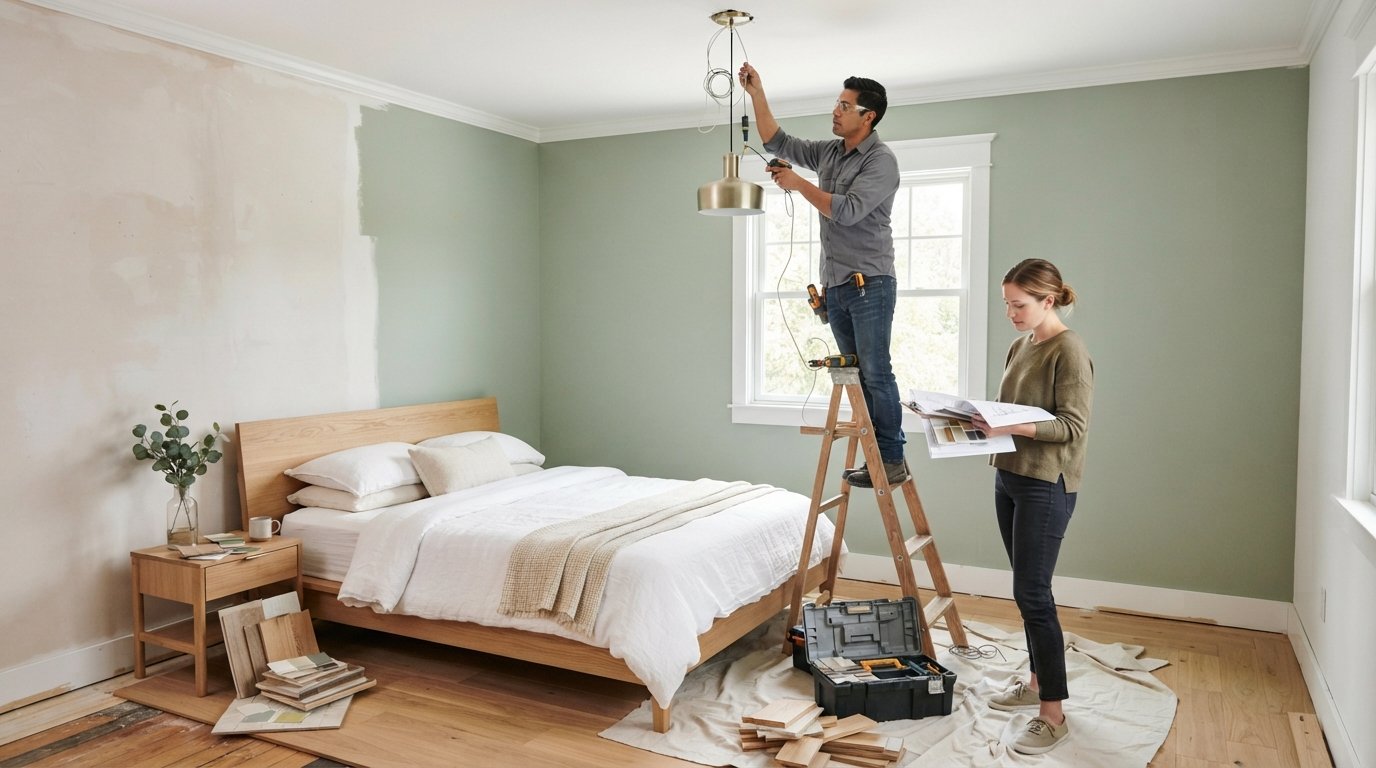
Bedroom Remodel Cost and Design Ideas for a Restful Space
Plan your bedroom remodel with confidence. Get cost ranges, layout tips, and 2026 design ideas. Call (833)-365-8755 for expert contractor matches.

By Alex Carter
Learn more about Room Remodel for guides, costs, and what to expect.
Compare Room Remodel Pros Near You

Enter your ZIP code to compare top-rated local professionals and request free quotes.
A bedroom remodel is one of the most personal renovations you can undertake. It is not just about resale value or impressing guests; it is about creating a private retreat that supports rest, relaxation, and your daily routines. Yet, despite its intimate nature, a bedroom remodel still requires the same careful planning, budgeting, and contractor selection as any other major home improvement project. Homeowners often ask two questions first: how much will it cost, and what design ideas will actually work in my space? This guide answers both, with practical cost ranges, layout advice, and design trends for 2026 that help you make confident decisions.
Average Bedroom Remodel Cost: What to Expect by Scope and Region
Bedroom remodel costs vary widely based on the scope of work, the size of the room, and where you live. A simple cosmetic refresh, such as painting, new flooring, and updated light fixtures, might cost a few thousand dollars. A full gut renovation that reconfigures the layout, adds an en suite bathroom, and installs custom closets can easily exceed $50,000. According to recent industry data, the national average for a mid-range bedroom remodel falls between $10,000 and $25,000, while a high-end project can range from $30,000 to $70,000 or more. These figures typically include labor, materials, and permits but exclude luxury finishes or structural changes.
Regional cost differences are significant. In high-cost metropolitan areas like San Francisco, New York, or Boston, labor and permit fees can push costs 30 to 50 percent higher than the national average. In the Midwest and South, costs tend to be lower, but material availability and contractor demand still influence pricing. For a more detailed breakdown of remodeling costs across different project types, see our home remodeling cost guide to understand how bedroom projects compare to kitchens, bathrooms, and whole-home renovations.
To give you a clearer picture, here are typical cost ranges by scope:
- Cosmetic refresh (paint, flooring, lighting): $3,000 to $8,000
- Mid-range remodel (new drywall, built-in closet, window replacement): $12,000 to $25,000
- Full renovation (layout changes, en suite addition, custom millwork): $30,000 to $70,000+
Keep in mind that these ranges are broad, and your actual costs will depend on your specific choices. For instance, adding a bathroom requires plumbing, electrical, and ventilation work that can add $20,000 to $40,000 alone. Replacing windows with energy-efficient models might cost $500 to $1,500 per window, but can reduce energy bills and improve comfort. Always get multiple quotes from vetted contractors to understand local pricing and avoid surprises.
Layout Changes Worth the Spend: Closets, En Suite Access, and Windows
Not all layout changes deliver equal value. Some modifications improve functionality and daily flow, while others are purely aesthetic. When planning your bedroom remodel, prioritize changes that enhance how you use the space. The three most impactful layout upgrades are closet expansions, en suite access, and window placement.
Closet expansions are almost always worth the investment. A walk-in closet or a well-designed built-in system can transform a cluttered bedroom into a serene space. The cost to convert an adjacent small room or hallway into a closet ranges from $5,000 to $15,000, depending on size and finishes. Custom shelving, drawers, and lighting add convenience and can increase home value. If you are short on space, consider a reach-in closet with modular organizers, which costs $1,000 to $4,000 and maximizes every inch.
En suite access is a major selling point. Adding a door from the bedroom to an existing bathroom (or creating a new en suite) improves privacy and convenience. If you already have an adjacent bathroom, simply reconfiguring the entry can cost $2,000 to $5,000. A full en suite addition, however, requires plumbing, electrical, and framing, and typically runs $25,000 to $50,000. This is a significant investment, but it can boost resale value and make your daily routine more comfortable. For homeowners in Dallas or Arizona, where master suites are highly desirable, this upgrade often pays off.
Window placement affects light, ventilation, and even furniture layout. Moving a window or adding a new one can brighten a dark room and improve airflow. However, exterior wall changes require structural work and permits, costing $3,000 to $8,000 per window. If moving windows is not feasible, consider skylights or solar tubes, which bring in natural light without major structural changes. Proper window placement also helps with energy efficiency; in hot climates, avoid west-facing windows that let in afternoon heat. Replacing old windows with double-pane, low-E glass improves comfort and reduces noise, a worthwhile upgrade for light sleepers.
Lighting, Color, and Texture: Design Ideas for a Restful 2026 Bedroom
The design choices you make in your bedroom directly affect how well you rest. For 2026, the trend is toward calming, layered environments that feel both luxurious and livable. Start with lighting: a single overhead fixture is no longer sufficient. Instead, aim for layered lighting that includes ambient, task, and accent sources. Install dimmable recessed lights for general illumination, add wall sconces or pendant lights beside the bed for reading, and incorporate soft floor lamps or LED strips for ambiance. Smart lighting systems that adjust color temperature throughout the day are increasingly popular; they can shift from cool white in the morning to warm amber in the evening, supporting your natural circadian rhythm.
Color palettes for 2026 lean toward warm neutrals, muted earth tones, and soft pastels. Think clay, sage, dusty rose, and warm gray. These hues create a soothing atmosphere and pair well with natural materials. Accent walls are giving way to tone-on-tone layering, where walls, trim, and ceiling are painted in closely related shades for a cohesive, enveloping feel. If you prefer bolder choices, use them sparingly: a deep navy or forest green on a single wall or on cabinetry can add depth without overwhelming the space.
Texture is the unsung hero of bedroom design. Mix materials to add warmth and interest: a linen duvet, a wool rug, wooden nightstands, and a woven headboard all contribute tactile appeal. In 2026, expect to see more sustainable materials, such as reclaimed wood, bamboo, and organic cotton. Window treatments also play a role; layered curtains (sheer plus blackout) offer both light control and softness. For a truly restful environment, invest in sound-absorbing elements like heavy curtains, upholstered headboards, and carpets, which dampen noise and create a quieter room.
Budgeting Line Items Homeowners Overlook: Trim, Outlets, and Doors
When estimating bedroom remodel costs, most homeowners focus on the big-ticket items: flooring, paint, furniture, and maybe a new closet. But several smaller line items can add up quickly and blow your budget if you are not prepared. Trim work, for example, is often an afterthought but can significantly impact the final look. Baseboards, crown molding, window casings, and door trim require materials and labor; for a typical bedroom, trim work can cost $1,000 to $3,000. If you are replacing doors, expect to pay $300 to $1,000 per door for the unit plus installation. Solid-core doors improve soundproofing and feel more substantial, a worthwhile upgrade for bedrooms.
Electrical outlets and switches are another commonly overlooked expense. Older homes rarely have enough outlets for modern needs. Adding or moving outlets costs $150 to $300 per outlet, and upgrading to USB-integrated or smart switches adds more. If you are adding a reading nook or a work-from-home corner, plan for dedicated circuits and data outlets. Do not forget about permits; many electrical and structural changes require permits, which can add $500 to $2,000 to your project. Always confirm with your contractor who is responsible for pulling permits and whether the cost is included in the quote.
Other overlooked items include:
- HVAC adjustments: If you change the layout, you may need to move vents or add a return, costing $500 to $1,500.
- Insulation upgrades: Adding insulation to exterior walls improves comfort and energy efficiency, at $1,000 to $3,000.
- Paint and drywall repair: Even small wall changes require patching and repainting, which can add $500 to $2,000.
By accounting for these details upfront, you avoid mid-project surprises and can allocate your budget more effectively. A good contractor will help you identify these costs during the estimate phase, so ask for a detailed breakdown that includes trim, electrical, and any necessary repairs.
How to Compare Bedroom Remodeling Quotes from Vetted Contractors
Comparing contractor quotes is not just about the bottom line; it is about understanding what is included, the quality of materials, and the contractor's experience. Start by getting at least three quotes from licensed, insured contractors who have experience with bedroom remodels. When you review each quote, look beyond the total price. Check if permits are included, whether the contractor will handle debris removal, and what the payment schedule looks like. A quote that seems low might exclude essential items like trim or electrical work, leading to costly change orders later.
Ask each contractor for references from similar projects and verify their license and insurance. A professional contractor will be transparent about their process and timeline. At 180 Remodel, homeowners can connect with pre-vetted contractors who provide customized quotes for bedroom renovations and other projects. The platform simplifies the process: you submit your project details, receive multiple quotes, and compare options side by side. This saves time and helps you make an informed decision. For homeowners seeking a reliable way to find qualified professionals, PlanRemodel offers a comprehensive directory of pre-vetted contractors across the United States, covering everything from bedroom remodels to roofing and HVAC.
When comparing quotes, use a checklist to ensure you are evaluating apples to apples. Key items to compare include:
- Scope of work: Does the quote include demolition, disposal, permits, and cleanup?
- Materials and brands: Are they specifying quality materials, or using allowances that may require upgrades?
- Timeline and milestones: What is the start date and estimated completion? Are there penalties for delays?
- Payment terms: Is the deposit reasonable (typically 10 to 30 percent)? Are payments tied to milestones?
- Warranty and follow-up: Does the contractor offer a warranty on labor and materials?
Do not automatically choose the lowest bid. A significantly lower quote may indicate cut corners or hidden costs. Instead, weigh the overall value, including the contractor's reputation, communication style, and attention to detail. A well-prepared quote that clearly outlines every aspect of the project is a sign of a professional who will deliver quality work.
Your bedroom remodel is an investment in your comfort and your home's value. By understanding cost ranges, prioritizing smart layout changes, and budgeting for overlooked details, you can create a restful retreat that meets your needs and your budget. Take the time to plan carefully, compare quotes from vetted contractors, and choose design elements that promote relaxation. With the right approach, your bedroom can become the sanctuary you deserve.