
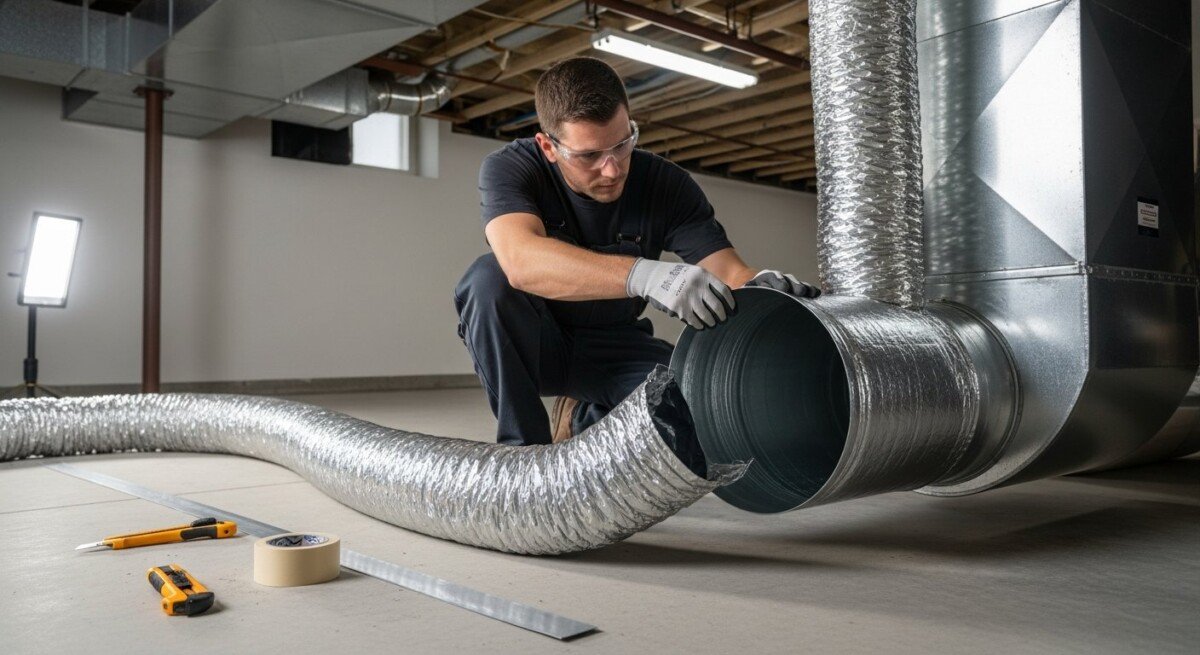
Air Duct Replacement: A Guide to Cleaner Air and Lower Bills
Learn when and why to replace your home’s air ducts. Discover the signs of failure, the replacement process, and how new ductwork improves air quality, comfort, and energy savings.

By Alex Carter
Learn more about Central Air Conditioning Repair or Maintenance for guides, costs, and what to expect.
Compare Central Air Conditioning Repair or Maintenance Pros Near You

Enter your ZIP code to compare top-rated local professionals and request free quotes.
Your home’s air ducts are the hidden highway for your heating and cooling system, quietly moving air to every room. But over years of use, they can become clogged with dust, develop leaks, or even suffer damage. When this happens, your system has to work much harder, your energy bills climb, and the air your family breathes may not be as clean as it should be. Understanding when and why to replace your air ducts is a key part of maintaining a healthy, efficient, and comfortable home.
Take the first step toward cleaner air and lower energy bills. Call 📞833-365-8755 or visit Request a Quote to schedule your free, no-obligation ductwork assessment today.
Understanding Air Duct Replacement
Air duct replacement is the process of removing the old, existing network of ducts in your home and installing a brand new system. It’s a significant home improvement project, but it’s often the most effective solution when cleaning or sealing your current ducts is no longer enough.
Think of it like the plumbing in your house. Over decades, pipes can corrode, develop small leaks, or get restricted with mineral buildup. Patching them might work for a while, but eventually, a full repipe is the best long-term fix. Your air ducts are similar; they are a critical component of your home’s infrastructure.
What Does the Ductwork System Include?
The duct system isn’t just the big metal tubes you might see in your basement. It includes the main supply and return trunks, the flexible branch lines that run to each room’s vents, and all the connections, elbows, and transitions. A professional replacement addresses the entire network to ensure balanced and efficient airflow throughout your home.
Why It Matters for Homeowners
Replacing worn-out air ducts delivers immediate and long-lasting benefits that touch nearly every aspect of your home life. The most direct impact is on your wallet. Leaky or poorly designed ducts can waste 20-30% of the air moving through them, forcing your furnace and air conditioner to run longer to reach your desired temperature. New, properly sealed ducts eliminate this waste, leading to substantial savings on your monthly energy bills.
Beyond savings, your family’s health and comfort are paramount. Old ducts can harbor dust, pollen, pet dander, and even mold, which are then circulated into your living spaces. This can aggravate allergies and asthma. New ducts provide a clean slate, drastically improving your indoor air quality and creating a healthier environment.
You’ll also notice a difference in comfort. Rooms that were always too hot or too cold often suffer from poor airflow due to duct issues. A new, correctly sized and designed system delivers consistent temperatures from room to room, eliminating those frustrating hot and cold spots for even comfort everywhere.
Common Issues and Their Causes
Several common problems can signal that your ductwork is failing. Understanding the causes helps you see why simple repairs aren’t always the answer.
Poor installation is a leading cause of early duct failure. If ducts are poorly supported, have sharp kinks, or use inadequate sealing materials from the start, they are prone to problems. Another major issue is age and material fatigue. Older ductwork, especially flexible ducting, can sag, tear, or simply degrade over 15-20 years of thermal expansion and contraction.
Here are the core issues that lead homeowners to consider replacement:
- Persistent Leaks: Gaps at joints or tears in the material let conditioned air escape into attics, crawlspaces, or walls.
- Restricted Airflow: Crushed sections, collapsed lining, or heavy internal buildup of dust and debris block the path of air.
- Contamination: Mold growth inside ducts, rodent infestations, or an accumulation of decades of dust that cannot be fully cleaned.
- Incorrect Sizing: Ducts that are too small for your HVAC system create backpressure and noise, while oversized ducts fail to move air effectively.
How Professionals Fix the Problem
A full air duct replacement is a systematic process performed by trained technicians. It begins with a thorough inspection and measurement of your home and existing system. Professionals use tools like blower door tests and camera scopes to assess the condition and plan the new layout for optimal performance.
The old ductwork is carefully removed to avoid damage to your home. The new installation involves fabricating and assembling the new duct runs, ensuring they are properly supported and sealed at every single connection with mastic or metal-backed tape,not standard duct tape, which fails quickly. The system is then tested for leaks and airflow balance to confirm it meets design specifications before your HVAC system is reconnected.
- Assessment & Design: Measuring your home and planning the new duct layout.
- Careful Removal: Taking out the old, compromised ductwork.
- Precision Installation: Building and installing new, correctly sized ducts with professional sealing.
- Testing & Balancing: Verifying airtightness and adjusting airflow to each room.
Signs You Should Not Ignore
Your home often gives you clear signals that your ductwork is struggling. Paying attention to these signs can help you address problems before they lead to a system breakdown or excessively high energy costs.
One of the most telling signs is a sudden, unexplained rise in your heating and cooling bills. If your usage habits haven’t changed but your costs keep climbing, leaking ducts are a likely culprit. Similarly, if some rooms never seem to get comfortable no matter what you set the thermostat to, it points to airflow distribution problems.
Take the first step toward cleaner air and lower energy bills. Call 📞833-365-8755 or visit Request a Quote to schedule your free, no-obligation ductwork assessment today.
Listen and look for these specific warnings:
- Dust constantly settling on surfaces shortly after cleaning.
- Visible dust puffing out from supply vents when the system kicks on.
- Whistling or rattling noises coming from the ducts.
- Visible gaps, tears, or disconnected sections in ducts you can see (like in basements or attics).
- Musty or stale odors when the HVAC system is running.
Cost Factors and What Affects Pricing
The cost of an air duct replacement varies based on several key factors. Being aware of these helps you understand estimates and the value of the investment. The size and layout of your home is the primary driver,a large, multi-story home with many rooms will require more materials and labor than a small single-story house.
The type of duct material chosen (e.g., sheet metal, flexible duct, or fiberglass duct board) and the accessibility of your existing duct runs also impact price. If ducts are easily accessible in an open basement, the job is simpler. If they are buried in tight attic spaces or enclosed walls, the labor intensity increases. Finally, local permitting requirements and the need for any modifications to your existing HVAC equipment will be factored in.
How To Choose the Right Professional or Service
Selecting the right contractor is crucial for a successful duct replacement. Look for a licensed, insured, and experienced HVAC company that specializes in ductwork, not just general handyman services. They should perform a detailed inspection before giving any quote and be able to explain their process clearly.
Ask for references and check online reviews. A reputable professional will also discuss important details like the sealing materials they use (mastic is superior to tape), how they will ensure proper airflow balance, and whether they perform a post-installation test to verify system performance. Get everything in writing, including a clear scope of work, materials, timeline, and warranty information.
Long-Term Benefits for Your Home
The decision to replace your air ducts is an investment in your home’s future. The long-term benefits extend far beyond the immediate improvement in air quality and comfort. You’ll protect your HVAC equipment from the strain of working against a faulty duct system, potentially extending its lifespan and avoiding costly premature replacement.
You’ll also future-proof your home’s efficiency, locking in lower energy costs for years to come. Furthermore, a modern, efficient duct system can be a valuable selling point, enhancing your home’s appeal and value to potential buyers who understand the importance of indoor air quality and low operating costs. It’s a upgrade that pays you back in savings, health, and peace of mind every single day.
Frequently Asked Questions
How often should air ducts be replaced?
Most duct systems last 15 to 25 years. Replacement is based on condition, not age. If your ducts are leaking, contaminated, or causing comfort issues, it may be time for a replacement, regardless of age.
Can I replace just part of my ductwork?
Spot repairs are possible for small, accessible issues. However, if problems are widespread, partial replacement often creates new imbalances. A full replacement ensures a uniformly efficient and sealed system.
How long does a full duct replacement take?
For an average single-family home, a professional team can typically complete a full replacement in 2 to 3 days. The timeline depends on the home’s size, complexity, and accessibility.
Will replacing my ducts make my house less dusty?
Absolutely. New ducts eliminate a major source of circulating dust and debris. You will notice a significant reduction in dust accumulation on your furniture and surfaces.
Do new ducts improve air conditioning performance?
Yes, dramatically. Your AC will cool your home faster and more evenly because cool air is no longer leaking out. The system will run shorter cycles, saving energy and reducing wear.
Is duct replacement messy?
A professional company will take great care to contain the work area. While some dust is inevitable during removal, technicians use drop cloths and sealing techniques to minimize mess, and they clean up thoroughly afterward.
What’s the difference between duct cleaning and replacement?
Cleaning removes debris from inside existing ducts. Replacement removes the old ducts entirely and installs new ones. Cleaning is maintenance; replacement is a solution for damaged or failing duct systems.
Can I install new ducts myself?
Duct replacement requires specialized knowledge of HVAC design, airflow dynamics, and building codes. Improper installation can severely harm system performance. This is a job best left to certified professionals.
Your home’s air ducts play a silent but vital role in your comfort, health, and finances. Recognizing the signs of failure and understanding the value of a professional replacement empowers you to make the best decision for your home. With new, efficient ductwork, you can enjoy cleaner air, consistent temperatures, and lower energy bills for years to come.
Take the first step toward cleaner air and lower energy bills. Call 📞833-365-8755 or visit Request a Quote to schedule your free, no-obligation ductwork assessment today.
Learn more about Central Air Conditioning Repair or Maintenance for guides, costs, and what to expect.
Compare Central Air Conditioning Repair or Maintenance Pros Near You
Enter your ZIP code to compare top-rated local professionals and request free quotes.