
Air Conditioning Preventive Maintenance Checklist for Homeowners
Use this air conditioning preventive maintenance checklist to extend your AC's life and cut energy bills. Simple monthly and seasonal tasks make a big difference.

By Rachel Green
Learn more about Central Air Conditioning Repair or Maintenance for guides, costs, and what to expect.
Compare Central Air Conditioning Repair or Maintenance Pros Near You

Enter your ZIP code to compare top-rated local professionals and request free quotes.
A functioning air conditioner is not a luxury; it is the barrier between your family and a sweltering summer. When the temperature climbs, the last thing you want is a system that wheezes, freezes, or quits entirely. The difference between a cool, comfortable home and a costly emergency repair often comes down to a simple routine. By following a structured air conditioning preventive maintenance checklist, you can extend the life of your unit, slash energy bills, and avoid the panic of a mid-July breakdown. This guide walks you through every task, from monthly filter swaps to annual professional tune-ups, so you can protect your investment and your comfort.
Why a Preventive Maintenance Checklist Matters
Many homeowners operate on a run-to-fail mentality with their HVAC systems. They ignore the unit until it stops blowing cold air, then call for emergency service. That approach is expensive. A neglected air conditioner loses efficiency year after year. Dust and debris accumulate on coils, refrigerant lines develop leaks, and electrical connections loosen. Each of these issues forces the system to work harder, consuming more electricity and generating more heat. Eventually, the compressor fails, and you are facing a replacement bill that could have been avoided with a few hours of care each year.
Beyond the financial impact, preventive maintenance safeguards your indoor air quality. A dirty filter recirculates allergens, dust, and pet dander throughout your home. For family members with allergies or asthma, that is a serious health concern. Regular maintenance keeps the air clean and the humidity balanced. It also reduces your carbon footprint. An efficient system uses less energy, which means fewer greenhouse gas emissions from power plants. In a world where energy costs fluctuate wildly, a well-maintained air conditioner is a small but meaningful step toward sustainability.
Finally, a maintenance checklist gives you peace of mind. You know when tasks are due, you have a record of service, and you can spot small problems before they become big ones. That sense of control is invaluable when you are managing a household budget.
Your Monthly Air Conditioning Preventive Maintenance Checklist
Some tasks are simple enough to handle every month. They take only a few minutes but pay huge dividends. Start with the most critical item: the air filter. A clogged filter is the number one cause of preventable HVAC failures. It restricts airflow, which causes the evaporator coil to freeze and the compressor to overheat. Check your filter monthly, especially during peak cooling season. If it looks gray and matted, replace it. For standard 1-inch filters, replace every 30 to 60 days. If you have pets or live in a dusty area, replace every 30 days. Thicker media filters can last three to six months, but always verify with the manufacturer.
While you are near the unit, inspect the condensate drain line. This is the pipe that carries moisture away from your indoor unit. Algae and mold can grow inside it, creating a clog. When the drain clogs, water backs up and can cause significant water damage to your ceiling or floor. To prevent this, pour a cup of distilled white vinegar down the drain line every month. This kills algae and keeps the line clear. If you see standing water in the drain pan, address it immediately; it may indicate a deeper clog.
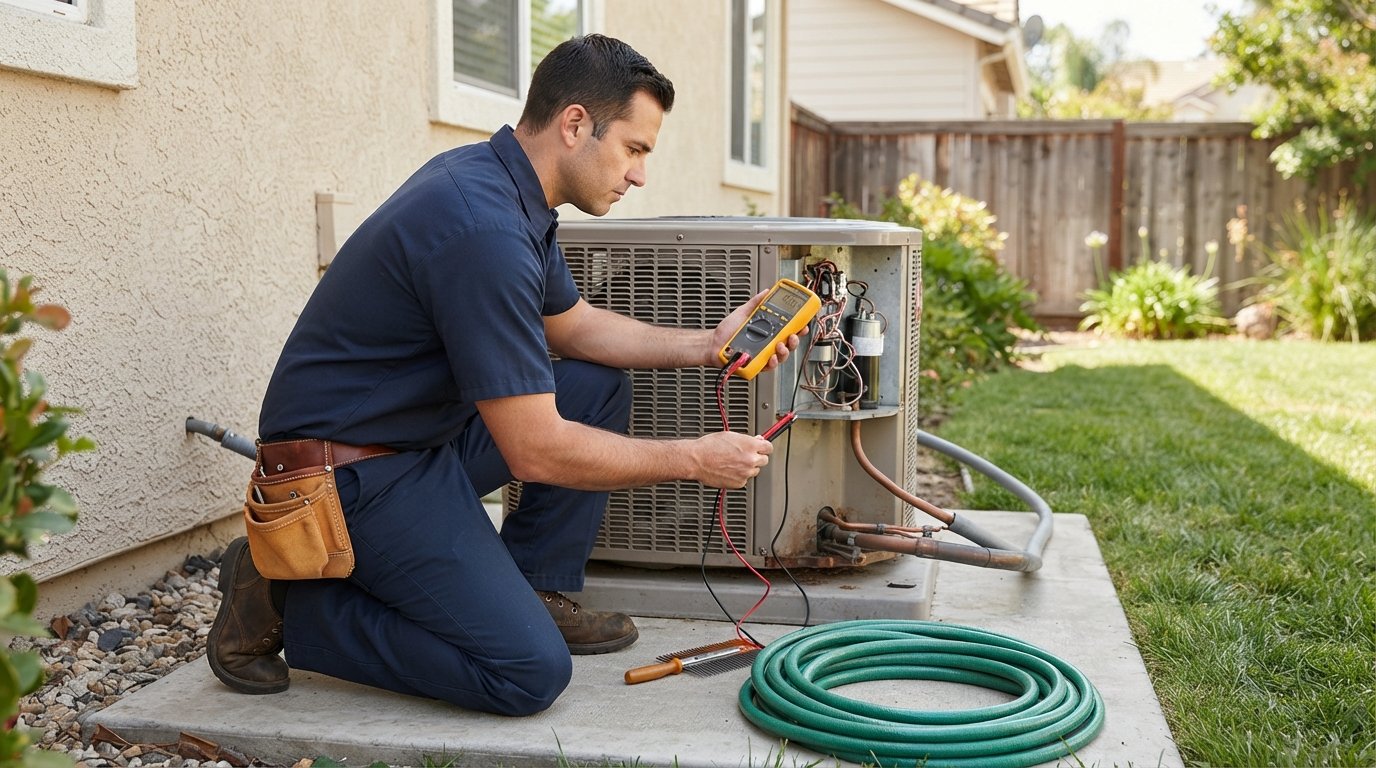
Next, check the outdoor unit. Remove any leaves, grass clippings, or debris that have accumulated around the base. The condenser needs at least two feet of clearance on all sides to expel heat properly. If shrubs have grown around it, trim them back. While you are outside, gently rinse the condenser coils with a garden hose. Turn the power off first. A soft spray is enough to remove surface dirt. Do not use a pressure washer, which can bend the delicate fins. These monthly habits form the backbone of your air conditioning preventive maintenance checklist.
Here is a quick monthly checklist to keep you on track:
- Inspect and replace the air filter if dirty.
- Pour vinegar down the condensate drain line.
- Clear debris from around the outdoor condenser unit.
- Rinse condenser coils with a garden hose (power off).
- Check the thermostat batteries and settings.
These five tasks take less than 30 minutes total. Yet they prevent the most common and costly AC problems. Make them a habit, perhaps on the first weekend of each month. Your system will reward you with reliable performance.
Seasonal Tasks: Spring and Fall Air Conditioning Preventive Maintenance Checklist
As the seasons change, your air conditioner faces different demands. In spring, before the first heat wave, you need to prepare the system for heavy use. In fall, after the cooling season ends, you need to winterize it and address any wear from the summer. These seasonal deep dives go beyond the monthly basics. They include tasks that require a bit more time and, in some cases, a professional touch.
In spring, start by turning off the power to both the indoor and outdoor units. Then, remove the outdoor unit's top grille and carefully vacuum the inside with a soft brush attachment. This removes debris that has settled over winter. Next, inspect the insulation on the refrigerant lines. Cracked or missing insulation reduces efficiency and can lead to frozen lines. Replace any damaged sections with foam pipe insulation from a hardware store. Check the condensate drain pan for rust or cracks. If you find rust, clean it and apply a rust-inhibiting spray. If the pan is cracked, replace it before it leaks.
Spring is also the ideal time to schedule a professional tune-up. A licensed technician will do a comprehensive air conditioning preventive maintenance checklist that includes checking refrigerant levels, testing electrical connections, lubricating moving parts, and cleaning the blower assembly. They will also test the capacitors and relays, which are common failure points. This service typically costs between $80 and $200, but it can save you thousands in avoided repairs. Many contractors offer a discount if you sign up for an annual maintenance plan. That leads us to the next section.
In fall, your focus shifts to protecting the system during the off-season. If you have a window unit, remove it and store it properly. For central systems, cover the outdoor unit with a breathable cover. Do not use a plastic tarp, which traps moisture and causes rust. Instead, use a purpose-built cover that allows air circulation. Before you cover it, do a final inspection. Look for signs of pest infestation, such as chewed wires or nests. Mice and insects love the warm, dark interior of an AC unit. If you find evidence, call a pest control professional before covering the unit. Finally, change the filter one last time and set the thermostat to fan-only mode for a few hours to dry out the indoor coil. This prevents mold growth during the dormant months.
Seasonal maintenance is not just about the AC itself. It is also about your home's overall readiness. Just as you would use a roofing maintenance checklist to prepare your roof for storms, you should prepare your HVAC system for extreme temperatures. A holistic approach to home maintenance saves you money and stress.
When to Call a Professional for Air Conditioning Preventive Maintenance
While many tasks are DIY-friendly, some require the expertise and tools of a licensed HVAC technician. Attempting these yourself can void your warranty, risk electrical shock, or damage the system. You should call a professional if you notice any of the following signs: strange noises (grinding, squealing, or banging), reduced airflow from vents, warm air blowing when the AC is on, frequent cycling on and off, or unexplained spikes in your energy bill. These symptoms indicate underlying issues that only a trained eye can diagnose.
A professional air conditioning preventive maintenance checklist includes tasks that are not safe or legal for homeowners to perform. For example, handling refrigerant is regulated by the EPA. Only certified technicians can purchase and recharge refrigerant. They also have specialized tools like manifold gauges, multimeters, and leak detectors. They can measure the system's superheat and subcooling to ensure it is charged correctly. Improper refrigerant charge is a leading cause of compressor failure. A technician will also inspect the ductwork for leaks. Leaky ducts can waste up to 30 percent of your cooled air. Sealing them requires mastic, foil tape, and sometimes a professional duct blaster test.
Another critical professional task is cleaning the evaporator coil. This coil is located inside the air handler or furnace. It is difficult to access without disassembling the unit. Over time, it collects dust and biological growth, which reduces its ability to absorb heat. A technician uses a special cleaning solution and a pump sprayer to clean it thoroughly. They also clean the blower motor and check the fan belt for wear. These tasks are essential for efficiency and longevity.
How often should you schedule professional maintenance? Once a year is the minimum. If you have a heat pump, which runs year-round, you should schedule two visits: one in spring for cooling mode and one in fall for heating mode. For standard AC systems, a single spring tune-up is sufficient. However, if you have pets, live in a dusty climate, or use the system heavily, consider twice-yearly service. The cost is minimal compared to the price of a new compressor or a full system replacement.
When you hire a professional, ask for a written report. A good technician will document the condition of each component, note any readings, and recommend repairs. This record is valuable if you ever need to file a warranty claim or sell your home. It also helps you track the system's health over time. If you are unsure how to find a qualified technician, consider using a platform like USremodel to connect with vetted HVAC contractors in your area. They can provide free quotes and help you compare options.
Building a Year-Round Maintenance Schedule
Consistency is the key to effective preventive maintenance. A sporadic approach yields sporadic results. To get the most from your air conditioning preventive maintenance checklist, create a calendar that spreads tasks across the year. This prevents overwhelm and ensures nothing is forgotten. Here is a suggested schedule that balances DIY tasks with professional service.
In early spring (March or April), schedule your professional tune-up. This is the busiest time for HVAC companies, so book early. While the technician is there, ask them to show you how to clean the condensate drain and check the filter. Then, in May, do your first monthly DIY check: replace the filter, clear the outdoor unit, and test the thermostat. In June and July, continue monthly filter checks and drain treatments. These are the peak cooling months, so vigilance is crucial. In August, do another deep clean of the outdoor coils and inspect the insulation on refrigerant lines. In September, as the cooling season winds down, replace the filter one last time and clean the outdoor unit thoroughly. In October, cover the outdoor unit and switch the thermostat to heating mode if you have a heat pump. In November, check the furnace filter and schedule a heating tune-up if needed. During winter, you can relax, but do a quick visual inspection of the outdoor unit once a month to ensure the cover is secure and no pests have moved in.
This schedule assumes a standard central AC system. If you have a window unit, you can follow a similar pattern but with less frequency. Window units are simpler, but they still benefit from regular filter cleaning and coil rinsing. For ductless mini-split systems, you need to clean the filters every two weeks during heavy use. The indoor units also have a condensate drain that can clog, so check it monthly.
To make the schedule stick, set reminders on your phone or write it on a whiteboard in your utility room. Pair maintenance tasks with other household routines. For example, change your AC filter on the first day of each month, right after you pay your rent or mortgage. Or check the outdoor unit every time you mow the lawn. These triggers make the tasks automatic.
Common Mistakes to Avoid
Even well-intentioned homeowners make mistakes that undermine their maintenance efforts. One of the most common is using the wrong filter. Filters come in different MERV ratings. A higher MERV rating means better filtration, but it also restricts airflow. If your system is not designed for a high-MERV filter, you can starve it of air, causing the coil to freeze. Always check your owner's manual for the recommended MERV range. For most homes, MERV 8 to MERV 11 is sufficient. If you need better filtration for allergies, consider a standalone air purifier rather than upgrading the filter.
Another mistake is neglecting the outdoor unit's surroundings. Homeowners often plant shrubs too close, thinking it hides the unit. But the unit needs airflow. Keep plants at least two feet away. Also, do not stack items on top of the unit or lean tools against it. The condenser fan needs to spin freely. In winter, do not cover the unit with plastic. Plastic traps moisture and causes rust. Use a breathable cover or simply place a piece of plywood on top to keep snow out of the fan.
Overcharging refrigerant is another serious error. Some homeowners think that adding more refrigerant will make the AC colder. In reality, overcharging reduces efficiency and can damage the compressor. Refrigerant levels should only be adjusted by a certified technician using precise measurements. If you suspect a leak, call a professional. They will find the leak, repair it, and recharge the system to the exact manufacturer specification.
Finally, do not ignore small noises or odors. A musty smell indicates mold in the ductwork or drain pan. A grinding noise suggests a failing motor bearing. A hissing sound could mean a refrigerant leak. These are early warning signs. Addressing them promptly prevents larger failures. If you are unsure, call a technician. The diagnostic fee is worth the peace of mind.
Tools and Supplies for Your Checklist
To execute your air conditioning preventive maintenance checklist efficiently, gather the right tools. You do not need a professional-grade toolkit, but a few items make the job easier and safer. Here is what to keep on hand:
- Replacement air filters (buy in bulk to save money).
- Distilled white vinegar (for the condensate drain).
- A soft-bristle brush and a vacuum with a brush attachment.
- A garden hose with a spray nozzle.
- Foam pipe insulation and foil tape.
- A multimeter (for testing thermostat batteries and low-voltage connections).
- Work gloves and safety glasses.
Keep these items in a dedicated bin near your HVAC unit. That way, when maintenance day arrives, you are not searching for a screwdriver. You can start immediately. For tasks that require a ladder, such as checking the roof or high outdoor units, always prioritize safety. If you are uncomfortable working at heights, hire a professional.
In addition to tools, keep a maintenance log. A simple notebook or spreadsheet works. Record the date, the tasks performed, and any observations. Note the filter size and MERV rating. Note the refrigerant type and amount added, if any. This log helps you spot trends. For example, if you notice that you are adding refrigerant every year, you likely have a slow leak that needs repair. The log also demonstrates to future buyers that you have cared for the home. It is a small effort with a big payoff.
Your air conditioner works hard to keep you comfortable. A little attention from you keeps it running smoothly for years. By following this air conditioning preventive maintenance checklist, you take control of your home's comfort and your budget. You avoid the scramble of emergency repairs and the shock of high energy bills. You also contribute to a more sustainable home. Whether you tackle the monthly tasks yourself or rely on a professional for the heavy lifting, consistency is your greatest ally. Start today, mark your calendar, and breathe easy. Your cool, efficient home awaits.